Extension Stand-on Flooring System
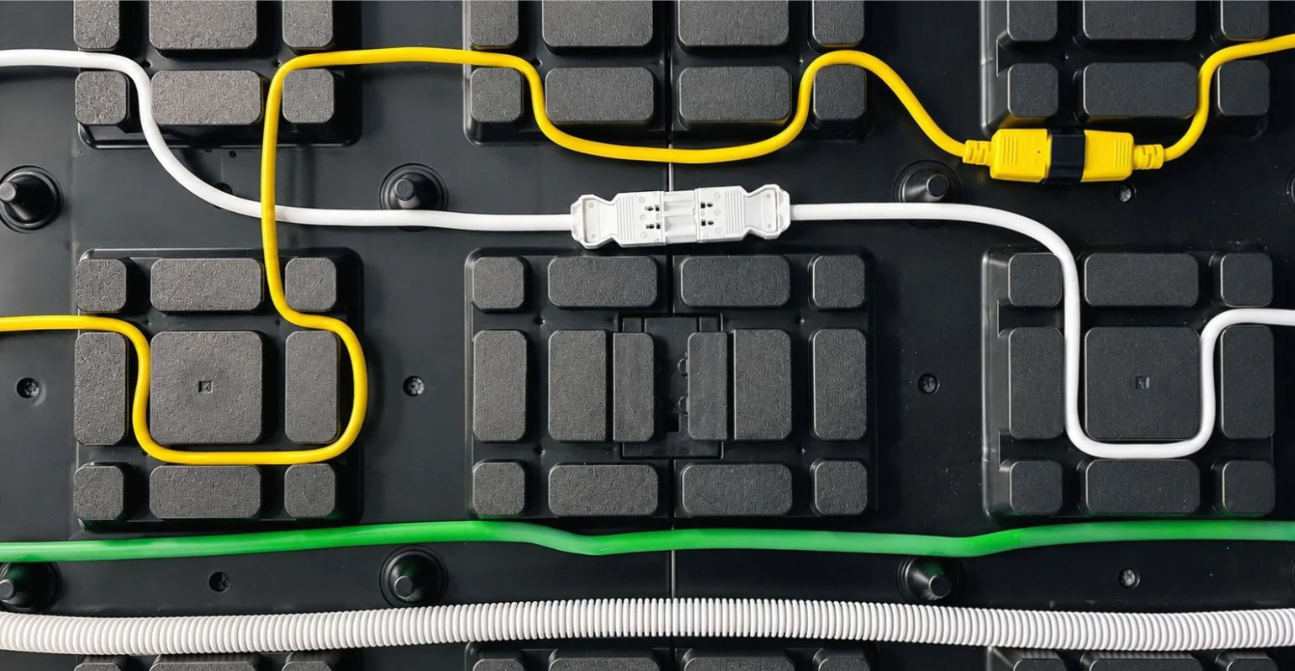
BPO has developed a redesigned exhibition floor tile, with the main challenge being to create additional cable-routing space without compromising the system’s overall height, stiffness, flatness or manufacturability.
The existing exhibition flooring system provides sufficient space for standard cable diameters, but growing market demand has created a need for a solution that can also accommodate larger cables. At the same time, the new version had to remain fully compatible with the existing floor tile.
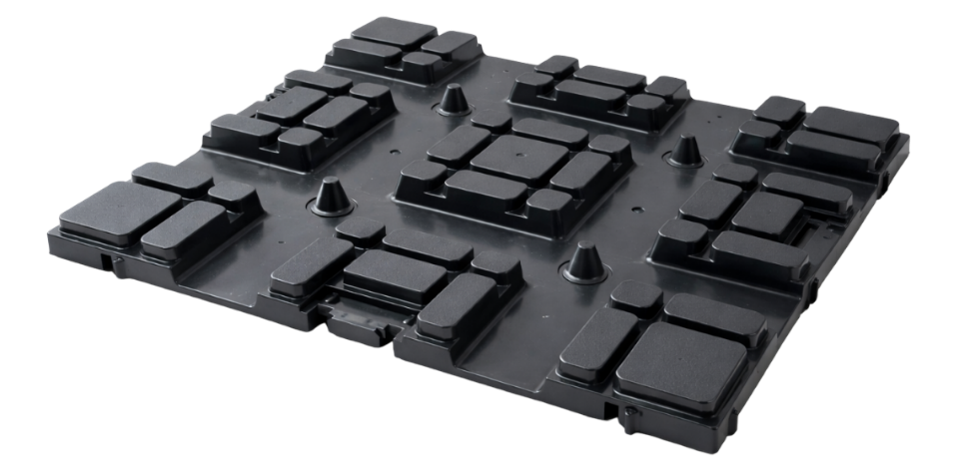
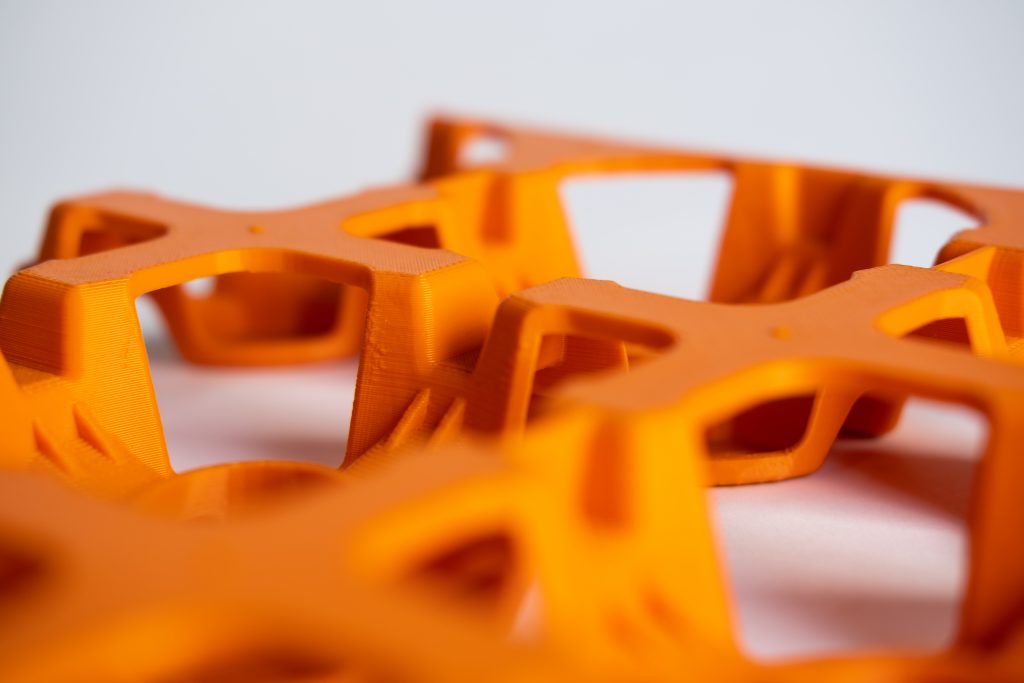
The updated exhibition floor tile consists of a base plate for cable routing and a cover plate that provides a level walking surface and options for customisation. Increasing the size of the cable channels and openings in the base plate immediately introduced a structural challenge: more space for cables meant less support for the cover plate, increasing the risk of deflection during use.
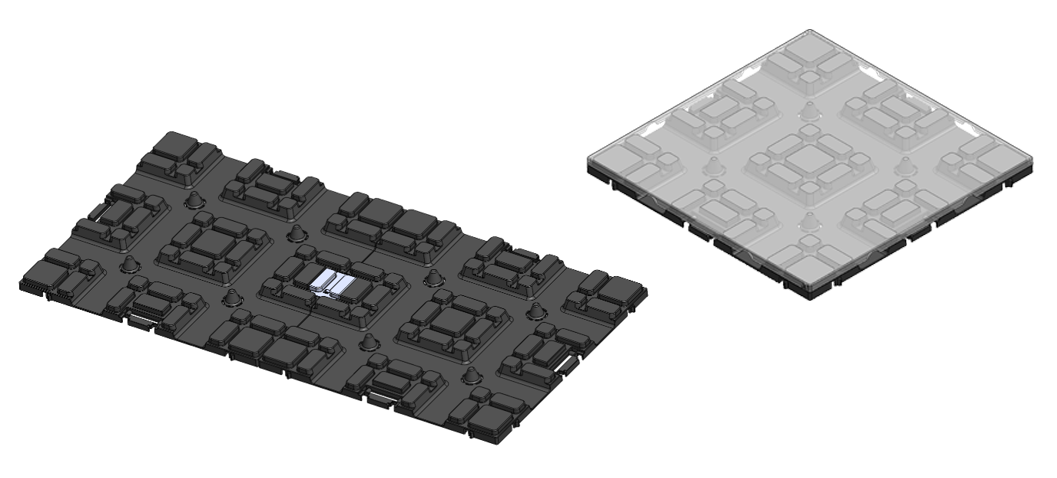
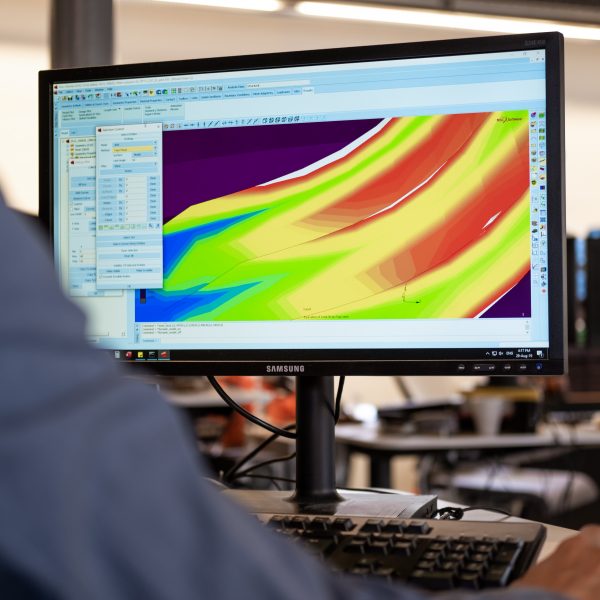
Using FEM simulations, several structural ideas were evaluated for strength and stiffness. The behaviour of the cover plate under load was investigated and optimised to ensure the surface remained sufficiently flat and stable.
In addition, Moldflow analyses were used to assess the manufacturability of the tile. This made it possible to evaluate the flow behaviour of the recycled material and identify potential risks of warpage at an early stage.
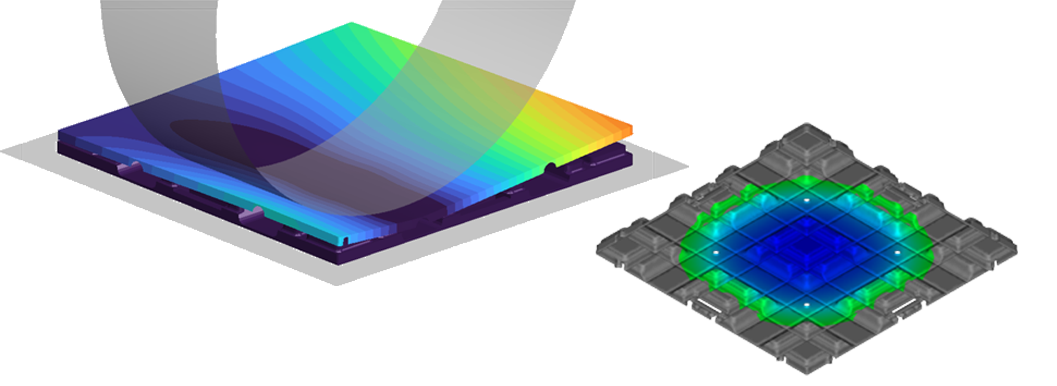
The result is a new-generation exhibition floor tiles that accommodates both small and large cables while remaining flat, stackable and robust. By combining FEM and Moldflow analyses, the design was optimised for both in-service performance and injection moulding manufacturability.
Would you like to learn more about this exhibition flooring system? Visit: https://abcdisplay.nl/.
Used services